 Image 1 of 1
Common Names:
Spiral Cactus, Twisted Cereus, Cereus spiralis (nursery trade name)
Family:
Cactaceae
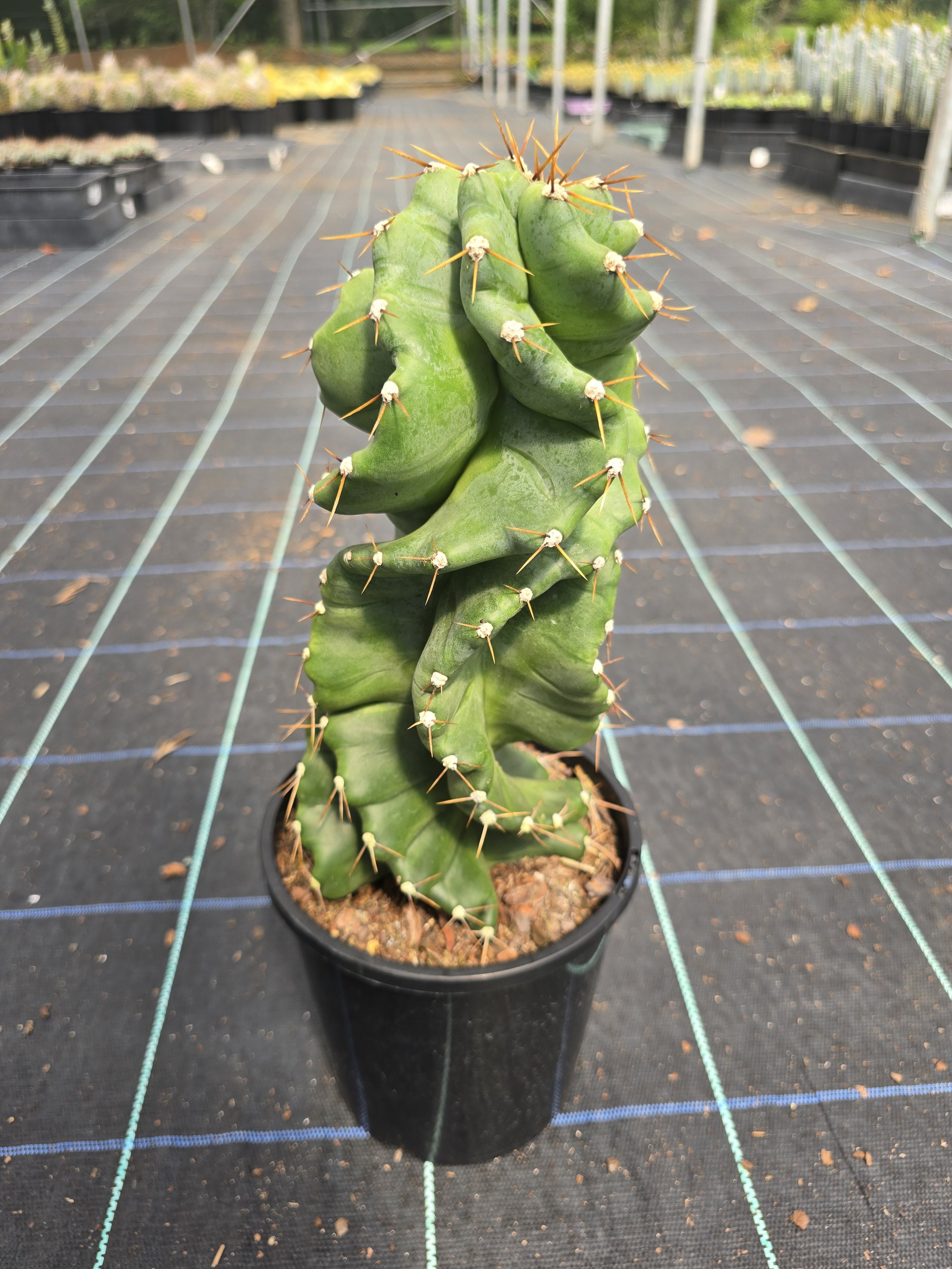
The Cereus forbesii 'Spiralis', commonly called the Spiral Cactus, is a visually stunning and highly sought-after cactus known for its unique, naturally twisting, spiraling stems.
Growth Habit:
A columnar cactus that grows upright while spiraling around its central axis, giving it a sculptural, almost surreal appearance.
Height:
In cultivation, it can grow up to 2–3 meters (6–10 feet) tall, though its height depends on age and growing conditions.
Stem Color:
Blue-green to green, often with a waxy coating that gives it a slightly frosted look.
Ribs:
Usually has 5 to 9 ribs that follow the spiral curvature of the stem.
Spines:
Short, gray to brownish spines emerge from areoles that follow the spiral pattern.
Blooming:
Flowers appear rarely in cultivation but when mature and under ideal conditions, it produces large, fragrant, night-blooming flowers.
Flower Color:
Typically white with pinkish outer petals, measuring up to 15 cm (6 inches) in diameter.
Pollination:
Often pollinated by bats and moths in its native habitat.
Light:
Loves full sun but can tolerate partial shade when young. More sun encourages stronger spiraling.
Soil:
Prefers well-draining cactus soil or sandy loam.
Watering:
Water deeply but allow soil to completely dry out between waterings. Reduce watering significantly in winter.
Temperature:
Not frost-tolerant. Protect from temperatures below -2°C (28°F).
Feeding:
During the growing season (spring and summer), feed with a low-nitrogen cactus fertilizer monthly.
Propagation:
Usually propagated by stem cuttings. Let cuttings callous before planting. Growing from seed is possible but slow.
Design Impact:
Highly ornamental and perfect for feature pots, rock gardens, or xeriscape designs.
Looks stunning in modern, minimalist landscapes or desert-themed gardens.
Container Growing:
Popular as a potted specimen because of its slow growth and architectural form.
The Cereus forbesii 'Spiralis' (Spiral Cactus) is a unique, visually dramatic, and relatively easy-to-grow cactus. Its natural spiral growth makes it a collector’s favorite and an excellent statement piece for any garden or cactus collection.